
Tuesday, December 22, 2015
Thoughts on the Phantom Menace

Thursday, November 26, 2015
Black Friday Book Sale
 Like most other bookworms, great books make their way onto my "things I'm thankful for" list every year. It's hard to choose favorites, but I went ahead and picked five books I read in 2015 and am thankful for.
- The Writer's Art by James J. Kilpatrick. This is a great book for those who wish to learn how to write better, or even just those who want to appreciate writing more.
- A Little Exercise for Young Theologians by Helmut Thielicke. This is a great introduction to theology, covering the reasons for studying theology as well as the pitfalls that theologians may fall into. Great book.
- Ancient Word, Changing Worlds by Stephen Nichols and Eric Brandt. This is a great book covering the history of views on Biblical Inspiration, Inerrancy, and Interpretation.
- The Lost World of Genesis 1 by John Walton. This is a great book for showing that Genesis 1 can be interpreted literally and still not lead to a Young Earth Creationist view. Great book.
- The Authoritative Calvin and Hobbes by Bill Watterson. This is technically a compilation of Calvin and Hobbes comics, but this is still a great book. Philosophical, funny, insightful, this has it all. Great book.
What awesome reads of 2015 are you grateful for? What books are you looking forward to reading in 2016?
A note on the Ebooks Only page. All books are listed as "Sold Out." This only refers to paperback copies of these titles. Please click onto the product pages to find descriptions and links to discounted or free ebooks.
Acknowledgements: Thanks to Leah E. Good for her work organizing this sale, Gloria Repp for completing the time consuming job of uploading book info to the sale website, and Hannah Mills for her fantastic design work on the website graphics. Hannah can be contacted at hmills(at)omorecollege(dot)edu for more information about her design services.
Sunday, October 11, 2015
Dear Christian Writers

Saturday, September 5, 2015
College Life
College has started. I said last week it hadn't started yet. Now it has. It's a bit worse and not quite as bad as I thought it would be. However, there is a lot of work required. Lots of writing and reading and pulling out my hair. So, this blog post is late. And I really don't have a lot of time to write stuff, so I'm just going to give a link and hope that I have something more substantive to give for next week. (But that doesn't mean you should leave.)
Friday, August 28, 2015

Friday, August 21, 2015
The Writer's Kiss

Friday, August 14, 2015
Interview with J. Grace Pennington

First, a bit of background: J. Grace Pennington has been reading stories as long as she can remember, and writing them almost as long. She is also a prolific medical transcriptionist, amateur musician, chocolate eater, daughter, sister, friend, and laundry folder. She lives in Texas, and if she was part of the Implant society, her role in the rebellion would probably be monitoring current events and correspondence in the computer center.
Now, on to the interview!
Friday, August 7, 2015
Dune and Doing Difficult Deeds
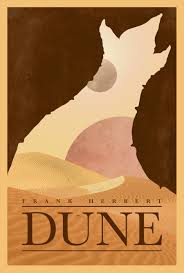
However, for all the beauties of the writing of the book or the plot of the book, that's not what I want to talk about. There's something very specific that Herbert presents in this book that caught my imagination and that is this: an easy life leads to poor people. Not necessarily poor in terms of wealth, but poor in terms of quality: intelligence, strength, and vision. It is those who are faced with all sorts of hardships that become the best, strongest, and most envied among humanity. This caught my attention specifically because I am entering college. How do the two relate? Well, college is hard.
Friday, July 24, 2015
Ready Player One and Physicality

That's not what I want to talk about. What I found particularly interesting was the idea of a virtual world (spoilers ahead) and the ramifications of such.
See, the world in the 2040's (when the book takes place) is pretty crappy. And, unfortunately, racism, sexism, and homophobia are still present. However, in the virtual world of the OASIS anyone can look however they want. All it takes is creating an avatar and voila: I can look like a buff, white male; a thin, Venezuelan supermodel, or a tall, hairy Minotaur. This is incredibly helpful for the minorities of the world. No longer is someone looked down upon for the color of their skin, because they can change it to look however they wish. No longer will a woman be made fun of, for she can make herself look as manly as she wishes.
That's an interesting concept (how the internet can help minorities), but the most interesting idea of all is what Cline says at the end. The man who created the OASIS comes to the main character and says, "It took me a long time to figure this out, but the OASIS is not all that there is to life. Only in the real world can one be truly happy." (paraphrased)
Why? Why is physicality something that important? I can make friends online. I can have wonderful relationships online. However, is there something about physicality that is necessary? Maybe it's not even that. Maybe it comes down to the point that true vulnerability, true relationship can only happen face to face. Yeah, I can spill my guts on the internet, but I could be making it up. I can talk to people on the internet, but my tone or words can be twisted out of their meaning. There is something about physical, face-to-face relationships that are better than online ones. That's not to knock online relationships. I have cousins who are overseas and I can only talk to them through the internet. That's great. But that enhances our face-to-face relationship. Then there are relationships that I have with people on the internet that I've never met. That's not bad. But were it possible to meet with them face to face, wouldn't that be better?
The problem is, as an introvert: I say, "No. I'd prefer to only talk to people on the internet. I'd prefer to never have to talk to someone face to face." But is that healthy? Aren't relationships necessary for healthy human life? Even if it is awkward, isn't awkward learning better than no learning at all? And, as great as internet relationships are, for me there is something about face-to-faceness that is so much better.
So is all this stuff in the book? No. The book had little to say on this subject other than offering up the question. But ever since I've read that book it has been in my mind. So there: now it's out.
What do you think? Is there something inherently better about face-to-face relationships, or is any relationship (whether over paper, screen, or in real life) equally good? Comment below and tell me what you think!
Friday, July 17, 2015
Writing Update: July 17 2015
There's a particular feeling of despair that comes over one when it is Friday night and I have no ideas for a blog post. When I have no idea what to write about, I go for something simple. Which is why I aimed for a writing update.
See, there's this thing I'm supposed to be: an author. I've even come out with two books (that's what that 'Books' tab at the top of the page means). The issue is this: the second book in my Kitten Mysteries series came out last July. And it's been a year (that's how time works, sadly) which means that the next book (The Kyge in the Mist) should come out soon if not now. The issue is that the book doesn't write itself and writing has been very slow recently. So I have almost nothing to say about the writing. So I'm not sure why I'm doing a writing update. Logic would dictate I would do something else, but, well, writing updates are easy and I haven't done one in a while. Maybe I should combine this with a reading update...
Reading Update: July 2015
I recently finished the audiobook of Ready Player One by Ernest Cline. Very interesting book. I should do a review of it soon.
I am currently rereading The Two Towers by JRR Tolkien. It's a fascinating book with amazing writing (as most people already know). I may even have a post coming soon about the scene where Gandalf, Theoden, and Saruman converse about Saruman's betrayal of all that is good. Look for that coming up, er, soon.
Back to Writing Update
Anyway, the writing is slow, but blog posts are continuous! Though, they may be a little late. So, I guess that's all I have to say for this week. If you want to encourage me to write more, comment below or yell at me on twitter @jesseorice.
See, there's this thing I'm supposed to be: an author. I've even come out with two books (that's what that 'Books' tab at the top of the page means). The issue is this: the second book in my Kitten Mysteries series came out last July. And it's been a year (that's how time works, sadly) which means that the next book (The Kyge in the Mist) should come out soon if not now. The issue is that the book doesn't write itself and writing has been very slow recently. So I have almost nothing to say about the writing. So I'm not sure why I'm doing a writing update. Logic would dictate I would do something else, but, well, writing updates are easy and I haven't done one in a while. Maybe I should combine this with a reading update...
Reading Update: July 2015
I recently finished the audiobook of Ready Player One by Ernest Cline. Very interesting book. I should do a review of it soon.
I am currently rereading The Two Towers by JRR Tolkien. It's a fascinating book with amazing writing (as most people already know). I may even have a post coming soon about the scene where Gandalf, Theoden, and Saruman converse about Saruman's betrayal of all that is good. Look for that coming up, er, soon.
Back to Writing Update
Anyway, the writing is slow, but blog posts are continuous! Though, they may be a little late. So, I guess that's all I have to say for this week. If you want to encourage me to write more, comment below or yell at me on twitter @jesseorice.
Friday, July 10, 2015
Book Review of Iscariot by Tosca Lee

This was a tricky thing for me. Because Judas certainly isn't a good person. He betrayed his best friend (though, in this version, the story isn't as cut and dried as all that). Yet I really connected with the character. From when the story starts with Judas as a child to when he betrays Jesus, I felt a connection with the character. I felt sympathy for him. I didn't agree with his actions: but I could actually feel like that was a choice I could make.
Here's the difference: Judas starts out as a good person. He strives to do good. And even when he's doing ill, he is still trying to do good. I have not watched Dexter, I haven't watched or read Game of Thrones. But I did watch the first two seasons of Breaking Bad and I only once felt a connection with Walter White. Then, as the series went on, I was more and more disconnected with the man because I never felt like that could really happen. Sure, it makes compelling storytelling and it was brilliantly executed. But I didn't care about someone who was out there to destroy the world, because really what he was doing didn't seem like an option that people that I knew would make. Of course, I could be wrong. Other people love the show, and I say great.
So if you're looking to encounter a tragedy and Breaking Bad isn't your cup of tea, may I suggest Star Wars Episodes I-III (though, the quality is lower than the other two I've mentioned). Or read Iscariot by Tosca Lee. It's well-written and well-told, a good read and a very thought-provoking book.
Thursday, July 2, 2015
The Best Part of a Book
Ever thought about what a book smells like? I was in a Barnes and Nobles recently and, to my surprise, I smelled a book. It was as if something unconscious inside me was interested not just in the feel of the story but the scent of it as well.
Friday, June 26, 2015
Post 100
This is blog post 100,
An event that's quite big,
I sought to do something special,
Something the readers will dig.
Saturday, June 20, 2015
Inspiration for Cat

Friday, June 12, 2015
Submission in Art
What is the point of art? To teach? To guide? To explore themes through story?
Is it to take a reader to a far-off land? To show someone how the world looks through my eyes? Or is it a way of letting someone enter my mind?
Is this what literature can do? Can it allow us to enter into the mind of another, to truly see the world through their eyes? To see the thoughts they have, to feel the emotions they feel?
Yet, thoughts are not gleaned from a place of skepticism. Stories are not understood from a place of pride. Emotions are not felt from a place of judgement.
Learning descends on the humble. Emotion visits the compassionate. Understanding visits those who listen.
How can this be done? How can I learn to appreciate art? How can I understand what the artist wishes to say? Through submitting to what the artist creates.
A Star Wars novel will not approached in the same way as a classic. A comic book should warrant a different approach than a Dostoevsky novel. Submit to what the author offers and accept what they give.
How should I do this? By being unafraid of what the artist offers. I need not agree with what I am given. I merely listen to what the artist offers. Through this place of acceptance and humility, I am able to connect with the other. Able to learn from that which is not me.
That will not happen if I am haughty. That will not happen if I am superior to the art I intake. It will only happen through submission.
Is it to take a reader to a far-off land? To show someone how the world looks through my eyes? Or is it a way of letting someone enter my mind?
Is this what literature can do? Can it allow us to enter into the mind of another, to truly see the world through their eyes? To see the thoughts they have, to feel the emotions they feel?
Yet, thoughts are not gleaned from a place of skepticism. Stories are not understood from a place of pride. Emotions are not felt from a place of judgement.
Learning descends on the humble. Emotion visits the compassionate. Understanding visits those who listen.
How can this be done? How can I learn to appreciate art? How can I understand what the artist wishes to say? Through submitting to what the artist creates.
A Star Wars novel will not approached in the same way as a classic. A comic book should warrant a different approach than a Dostoevsky novel. Submit to what the author offers and accept what they give.
How should I do this? By being unafraid of what the artist offers. I need not agree with what I am given. I merely listen to what the artist offers. Through this place of acceptance and humility, I am able to connect with the other. Able to learn from that which is not me.
That will not happen if I am haughty. That will not happen if I am superior to the art I intake. It will only happen through submission.
Friday, June 5, 2015
Book Review: The Missing Kitten by Jesse Rice

The first thing I noticed is that it's kind of slow. There's a lot of running around without really getting anywhere until the climax. Though, maybe that's because I kept finding the terribleness and feeling generally anxious about how 'bad' the book was. The prologue, at least, felt well written to me (though some descriptions were a bit unnecessary). However, with its darker tone, the abrupt shift into the first chapter's goofy feel made the read a bit awkward. A reader told me that this book is a strange combination of a children's mystery with a dark thriller. So, take that as you will.
While speaking of unnecessary descriptions: the pasture numbers and the directions and the general running around is way too confusing. Even me, the one who knows the landscape that I wrote about, kept wondering what in the world was going on. That kind of stuff should be left up to the imagination or, at least, described in a much more complete sense rather than just randomly mentioning things. I've heard from my readers that the map in the back of the book helped, but that's still something I have to work on. I hope I did better with that in the second book, but that's a different book review.
Another thing that struck me is that my writing is pretty unpolished. It's like an excited kid telling a story, lots of jumping around and talking and stuff, and then a brief bit of description to help (or confuse) the reader. I need to work on making my exposition either more interesting or more relevant (maybe I'll do a post on that later).
Normally, in a book review I would talk about the theme here. With this book there's not a whole lot of a theme, though there is one section which I'm proud of (I'm not sure if that's in a cheesy sense or in a good sense, though). One character talks about how perfection is not innocence or naivete; rather, perfection is an encounter with and a rejection of evil. I guess other readers will have to make up their own mind whether that's a theme actual presented enough in the book to be worth talking about.
The last thing about this book is this: even with all those previous quibbles, I still feel it's one of the best books I've written. It's fun, it's not shoving a moral down my throat (though there is still one there), and it sets up stuff for the rest of the series without making it seem like a set up novel. Though, there are definitely some spots that push it away from being an entirely standalone story. Still, I think it's par for the course for a kid's book (not sure if that's a good thing, though...). I'd give it 3.5 to 4 stars, though I must admit I'm probably somewhat biased.
Anyway, enough of my rambling: what did you think? Have you read The Missing Kitten? If you have, comment below! Or tweet me @Jesseorice. Did you think my review was fair? Or has this review shown that you'll never read The Missing Kitten? Comment about that! Basically I'm just asking for interaction because I get bored just typing on a screen all day. With that said, I guess I'll type at you next week! Bye.
Friday, May 29, 2015
How To Better Appreciate Stories

Friday, May 22, 2015
How do I Review a Story?
The pain of writing a weekly blog is forcing oneself to put out content week after week. There are weeks I just don't feel it. And then there are weeks that I want to write something, but I don't really know what to write. So I'm just going to write what's on my mind. Today, that is reviewing things.
Friday, May 15, 2015
Book Thoughts: Foundation and Earth by Isaac Asimov

Friday, May 8, 2015
Comprehending Narrative Art
"Question: What is Art?
"Answer: Art is exploring questions about life through narrative."
"How does that work with paintings or sculptures?"
"Point taken. Therefore 'Answer: Art is exploring questions about life through narrative or emotion.'"
"Very good, answer accepted. Continue."
"Answer: Art is exploring questions about life through narrative."
"How does that work with paintings or sculptures?"
"Point taken. Therefore 'Answer: Art is exploring questions about life through narrative or emotion.'"
"Very good, answer accepted. Continue."
Subscribe to:
Posts (Atom)